
Meg3. Rest Time — Dimensional Unit Assignment
φ in second-moment units
Ace Consultancy · Rey.BEng 16th September 2026
This page separates the letters so dimensional analysis can be run without the ontology talking over it. Rest Time is the packet (h) and the hold (f). Every other mark is assigned here once. Superscript without a tick is an ordinary power, written (n) or (n) when it must not be read as a journey. A tick is a journey. Seconds marked{2} can taske a tick if this journey is intended
Distance
| Member | Unit | Role |
|---|---|---|
| Observational | m^ | length |
| Real | m^2 | area |
| Simultaneous | m(3) | volume; can |
| Instant | m^4 | centroid; Time-Particle axis |
Time
| Member | Unit | Role |
|---|---|---|
| Observational | ContSec | continuous second; Algebraic Real arena |
| Real | RealSec; (h) | packet |
| Simultaneous | m.s as time; N^/m(2) | duration; vortex skin |
| Instant | k.g.s^2 | package of the instant |
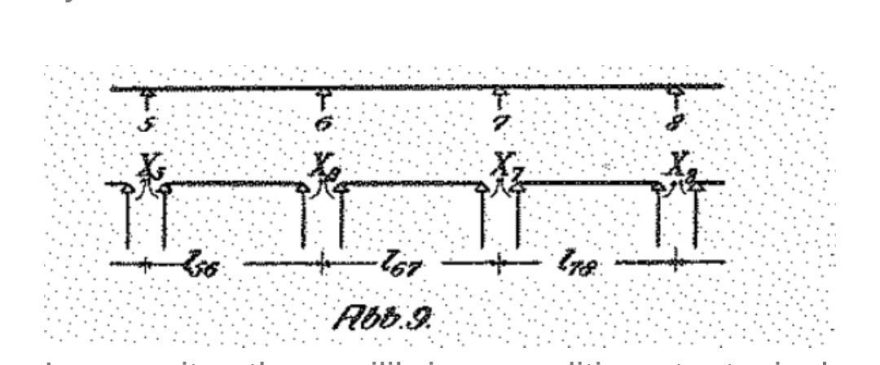
Lewe, ’06 Abb. 9 places the supports. m.s is the product along the support.
Force package
N = k · g · s^2
| Letter | Unit sense | Role |
|---|---|---|
| (k) | pulse | CMB-2 relative to CMB-1;, ; hold |
| (g) | vector | clamp to m^4 centroid; Lewe 1906 |
| s^2 | area of time | countersnap; 1st to 2nd moment, CMB-1 to CMB-2 |
Real Force, first principles:
N^ m / s²
One tick on (N). Do not spend ^^ =2 twice.
Residuals and carriers
| Mark | Unit | Role |
|---|---|---|
| residual speed, c | m^/s | Observational length over time |
| σR | m/s^2 | celerity squared; whip; \(2^-\); State A precession |
| ^i^ | TBC | no units for now; angel |
| α | arcsec | disc-to-rim tilt |
| rm=πE^^ | growth face | 1st shell |
| (f) | duration | line to circle; or f ^^ if the two firing ticks are (f) |
Infinity — stance-relative
from Observational (disinterested) ^s^{(3)} / m^{(2)}from ^i^ 3^s / √(2 i m)
Orthogonal surface energy is spent. Close +.
Organised conservation
E = m^(c^2)
Mass: first moment (base).
c^2: second moment (stroke counted).
View from a Part. Tick before the square. Not cm
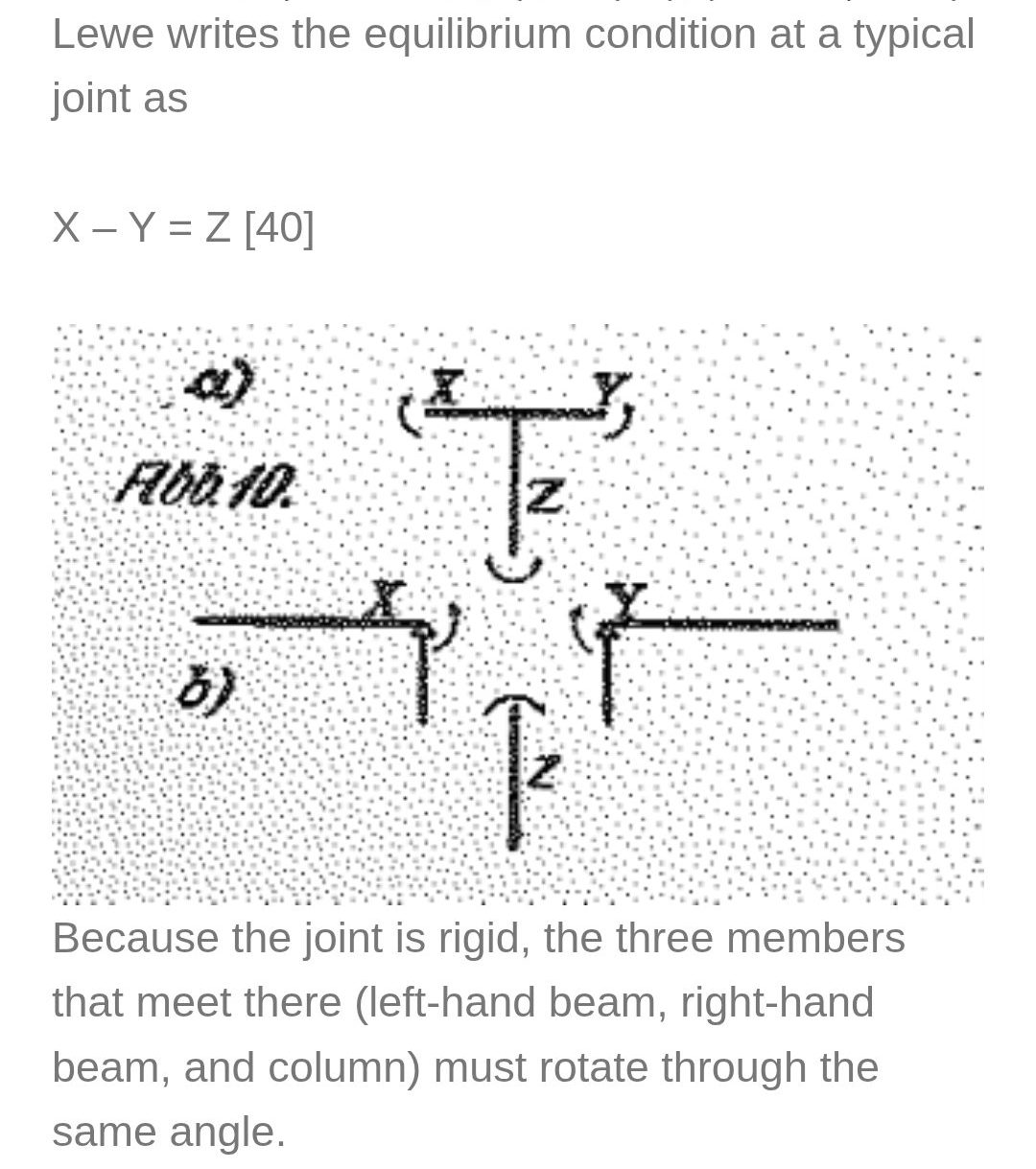
Joint (Lewe [40]):
F ⟨i⟩ M = 3s / √(2m)
Conclusion — units of \(\varphi\)
The last constant lettered on the contact:
1/φ = φ − 1
Lead for the harmonic seat. Involution; State A / B is direction of the fold, not a third unit.
φ m^4
Second moment. Limit of entropy:
S = φ^{m(4)}
Origami from flat: right-over-left or left-over-right. Bending is the power. Source is \(s^3\). Choose \(+/-\). Do not live in strive.
Dimensional check of the involution (same house):
φ m^41/φ 1/m^4φ − 1 m^4 − 1 (1 is the locked-cell count, dimensionless as mark)
The identity is geometric, not an SI homogeneous line until (1) is read as the locked cell carried by the tick, not as a metre. Rest Time assignment: lives on Instant’s centroid band. That is why the second moment can choose it.
Strip for the drawing
Distance Observational m^ Real m^2 Simultaneous m(3) Instant m^4Time Observational ContSec Real h RealSec parcel Simultaneous m.sTension Ring / boundary σ_R m/s² Simultaneous N^/m(2) Moment N^ m s(2) Instantaneous N^ m/s²Residuals Instant package k.g.s^2 Centroid φ m^4 Entropy limit S = φ^{m(4)} Elastic energy E = m^(c^2) State A 1^/φ => φ-^1 State B φ-^1 => 1^/φ (−1/2 + judder)Power A 3^s / √(2 i m) B ∞ ^s(3) / m(2)Now Toggle A +/− (choice) B −/− (default)
Units for Euler-Eytelwein …
Lewe, 1915, on continuous beams, points the reader to Eytelwein’s method of 1808, and behind that to Navier, 1826. That is not a courtesy citation. It is the belt the shell was already wearing.
Johann Albert Eytelwein (1764–1848), director of the Berlin Bauakademie, put Euler’s belt-friction analysis into the second volume of Handbuch der Statik fester Körper (1808). The formula that still carries both names is the capstan, or Euler–Eytelwein, equation: a flexible line wrapped on a cylinder, hold-side tension to load-side tension, friction and wrap angle only.
T_load / T_hold = e^{μ θ}
in radians. One full turn is 2pi. The ratio does not depend on the radius of the drum. A small tail holds an exponential load. That is why a bollard works, why a band brake works, why a tank wall can look “too thin” in a coefficient table and still stand.
Navier (1826) gave the elastic line and the beam its first general lesson-book. The belt and the beam are the same grammar: a line that must change direction, a residual around the change, equilibrium written on an element
Love (1892) raised that grammar to the first accurate shell theory: membrane plus bending plus edge. The cylinder is no longer a drum the rope goes round. It is the rope, closed on itself.
Lewe (1906, 1915) took Love onto the tank and onto the particle. The 1915 matrix is shell theory for practice. The unnamed extra hoop in later PCA tables is the capstan residual still sitting in the matrix.
Lubarda’s remark is the hinge: the capstan relation is already reminiscent of the hoop force in a thin ring under internal pressure, and of the circumferential force in a nonuniformly loaded thin cylindrical shell.
That is Ace shell theory’s permission to name the residual.
Drop-in is analogical, not unit-for-unit.
e^{μθ} dimensionless factor on a beltσ_R m/s² leftover as celerity²
You cannot paste m/s2 into a slot that expects without a reduction. The reduction is the assignment already frozen above:
θ ↔ f duration of wrap / holdμ ↔ whip State A precessione^{μθ} ↔ 2 → 1.999… compression of the strokeT_hold ↔ pr/t membraneT_load ↔ pr/t + σ_R
Lewe supplies the shell matrix. Eytelwein supplies the belt the matrix was using without saying so. Navier and Love are the beam and the shell between them. in m/s2 is the dimensional face of the same whip; is the dimensionless face used when you stay in Observational and only need a factor.
Ace x

