
The YouTube video at https://youtu.be/wZzNNCqCl_Q, titled PROOF OF CONCEPT, is a short presentation-style video from January 13, 2026, outlining the personal scientific thesis detailed below. My work is intended to correct the engineering record from the undisclosed theory in the PCA 1993 directly to Viktor Lewe 1906 and to revive and connect historical ideas about the aether that have been either suppressed or overlooked. The Author believes that this cover page note from PCA ’93 note confers a Duty on Engineers to understand the theory, and to share it, because truth must be told.
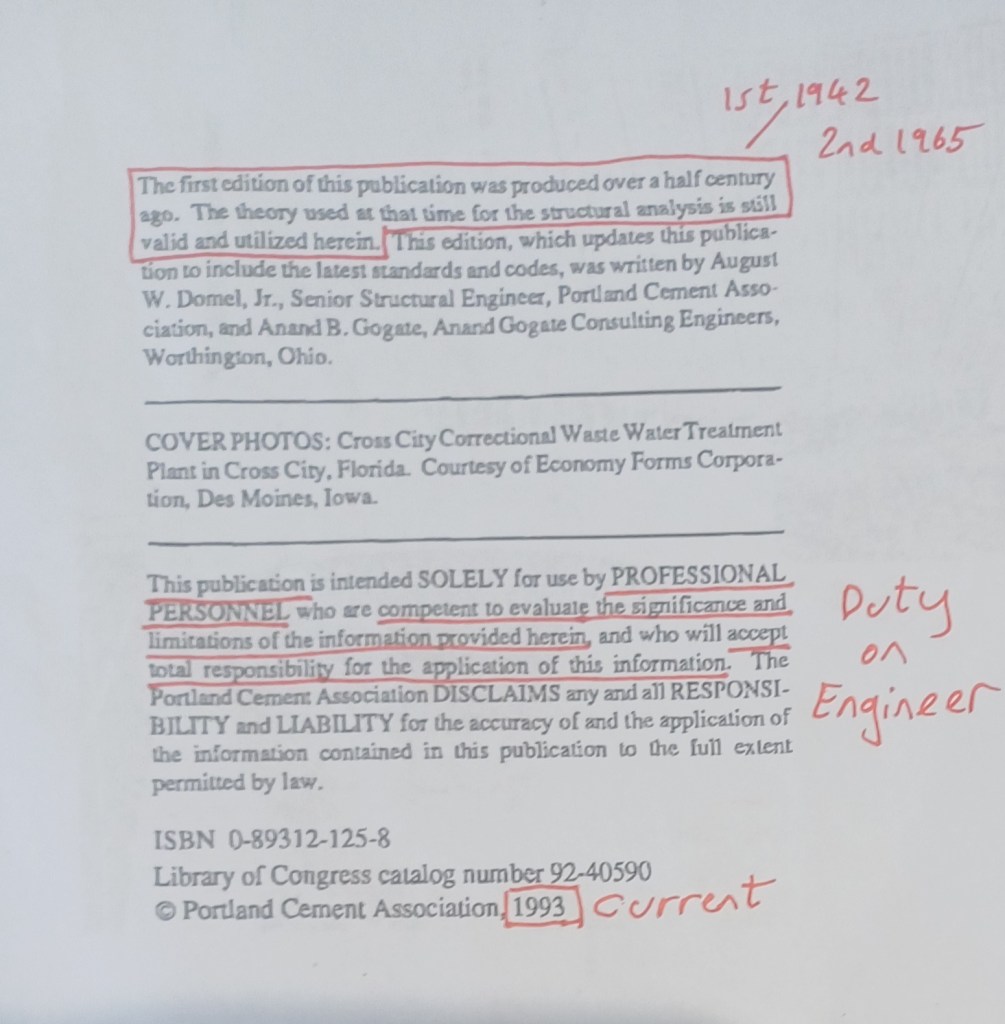
Aether Reborn: Reynolds’ Granular Medium and Lewe’s Mechanics of the Earth’s Elastica
Abstract
This thesis links historical mechanics references to demonstrate the aether as Reynolds’ granular, dilatant medium governed by Lewe’s sudden fixations and viscous handovers at the transition from Tension to negative tension – compressive strength of stretching at critical viscosity. This boundary is best analysed at its power source which is The Elastica here placed and defined as the Earth’s lower mantle/outer core intersection — currently carrying a concrete hardened crust of tectonic plates, an inefficient boundary expanding with vector potential now focussed at the cracks creating actual motion between giant slag shells (energy leakage via tectonic shifts).
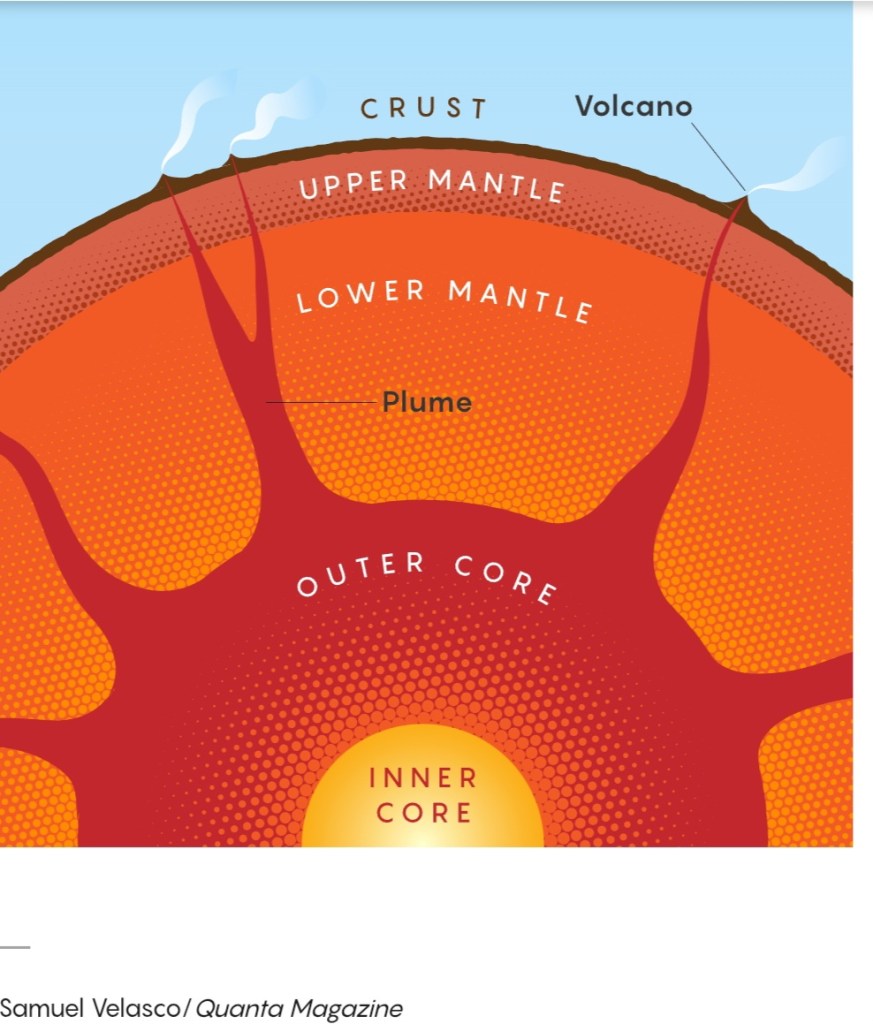
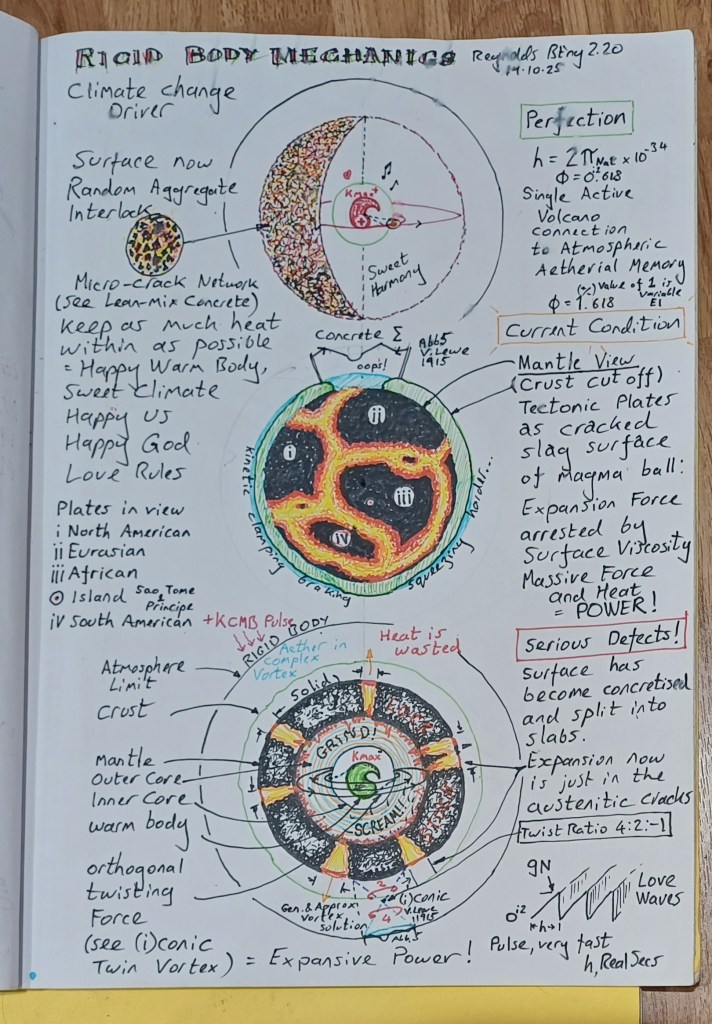
This is the critical viscosity threshold (Re = 2.16) for laminar-turbulent handover in aetherial grains, creating random aggregate interlock surface,, inducing twisting force and geometrical acceleration. Earth as universe centre anchors the elastica as fixed equilibrium point about which all twisting forces are resolved.
Existing texts are interconnected with author’s drawings to reveal engineering proofs, including PCA 1993 tables rebuilt from Lewe 1906
Chapter 1: The Historical Foundation (AEH Love 1892)
A.E.H. Love’s A Treatise on the Mathematical Theory of Elasticity (1892) traces elasticity from Cauchy/Navier to continuum mechanics, emphasizing internal stresses in solids. Updates on ace-consultancy.uk link to da Vinci’s Madrid Codex (1490–1505), with sketches of fluid vortices and structural bending (Vol. I, fol. 126r) prefiguring granular boundaries under tension.
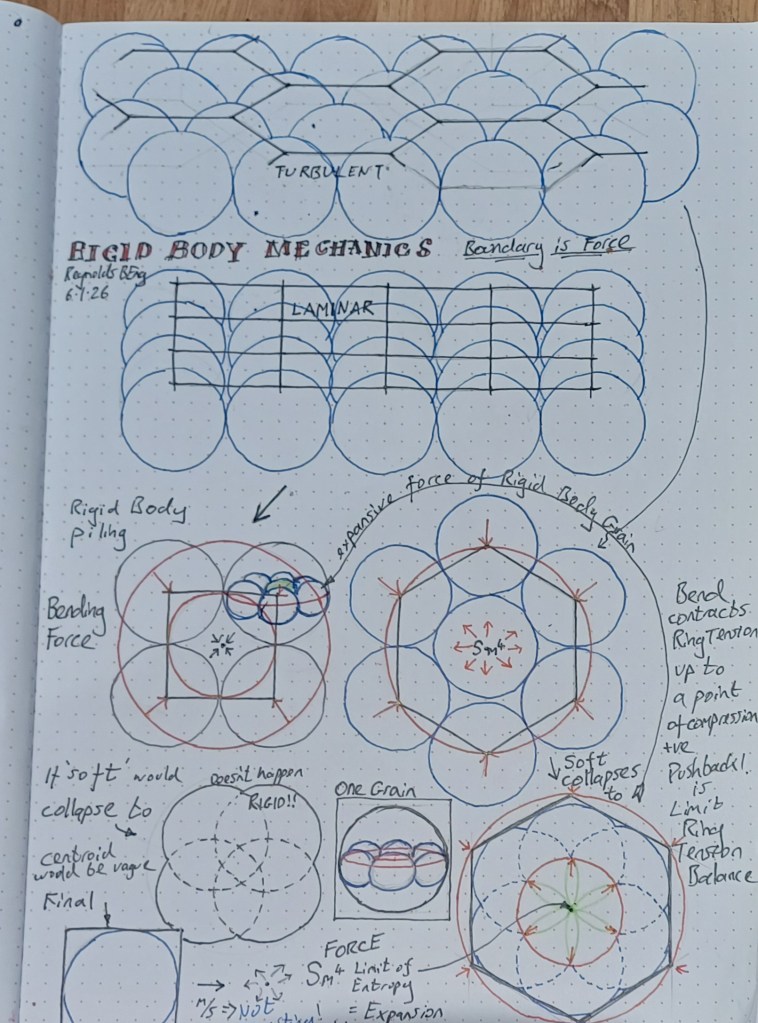
Author’s drawing “Boundary is Force” (6.1.26) illustrates the elastica as piled rigid bodies creating the strength of the material of the mantle plates in this case, where bending creates ring tension at cracks—mirroring Love’s stress distributions as aetherial precursors, with Earth’s current mantle state as inefficient; a concretised shell focusing vector potential at tectonic seams instead of sweetly distributed.
Chapter 2: The Granular Aether (Osborne Reynolds 1903)
Osborne Reynolds’ On the Sub-Mechanics of the Universe (1903, Parts 1–3) defines the aether as granular, dilatant medium, with Parts 1/2 translating fluid to ionic scales and Part 3 satisfying Helmholtz’s pledge for unified mechanics. Grains under shear-thickening propagate waves; gravity as viscous boundary. The elastica (exhibiting as Earth’s mantle/plates) is the laminar-turbulent transition, with viscosity as entropy limit.
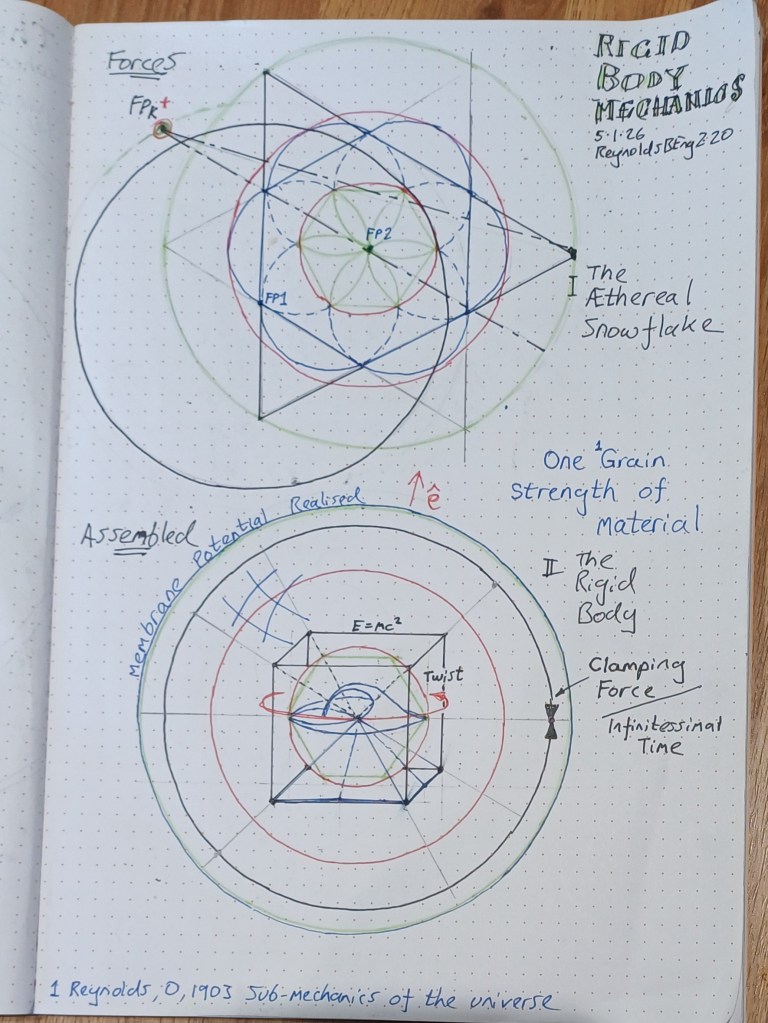
Author’s drawing “Aetherial Snowflake” (5.1.26) depicts hexagonal grain assembly scaling micro-macro in Tychonic system, with Earth as universe center (fixed granular equilibrium per Reynolds’ absolute rest).
Chapter 3: Vector Potential and Fixed Points (Lewe 1906)
Lewe’s 1906 dissertation Die plötzlichen Befestigungen eines starren Körpers introduces force over infinitesimal time as sudden fixation, with vector potential fixed points for equilibrium in stressed continua. This “how” reifies Reynolds’ interactions, where twisting at boundaries accelerates vectors.
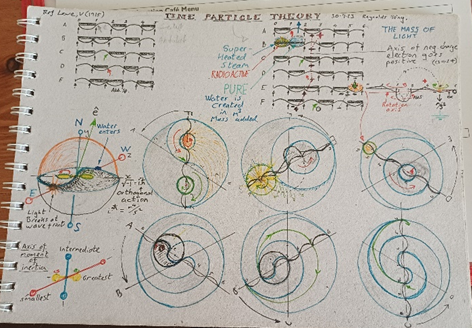
Author’s drawing of yin-yang twist (from Lewe 1915 Abb. 5/14) illustrates 1906 concepts, with the elastica forced into mantle cracks as focus for vector potential expansion—inefficient concretisation causing slag shell motion.
Chapter 4: Reinforced Mechanics and Twists (Lewe 1915)
Lewe’s 1915 dissertation Über die Theorie der plötzlichen Befestigung starrer Körper and Handbuch für Eisenbetonbau contributions extend 1906 to reinforced structures. Abb. 5 (rotating wave forces) and Abb. 14 (balanced twist) depict layered continua with bidirectional rotation as elastica twisting in infinitesimal time.

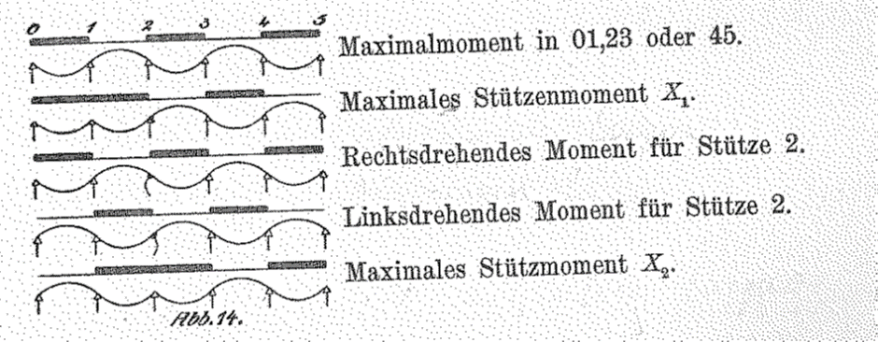
Emperger’s intro in Der Handbuch fur Eisenbetonbau, 1923, thanks “Dr. Ing. W. Lewe” for “statics of containers,” linking via Carpenter 1927 to the PCA coefficient tables.
Chapter 5: Coefficient Tables and Negative Mass Moments (PCA 1993)
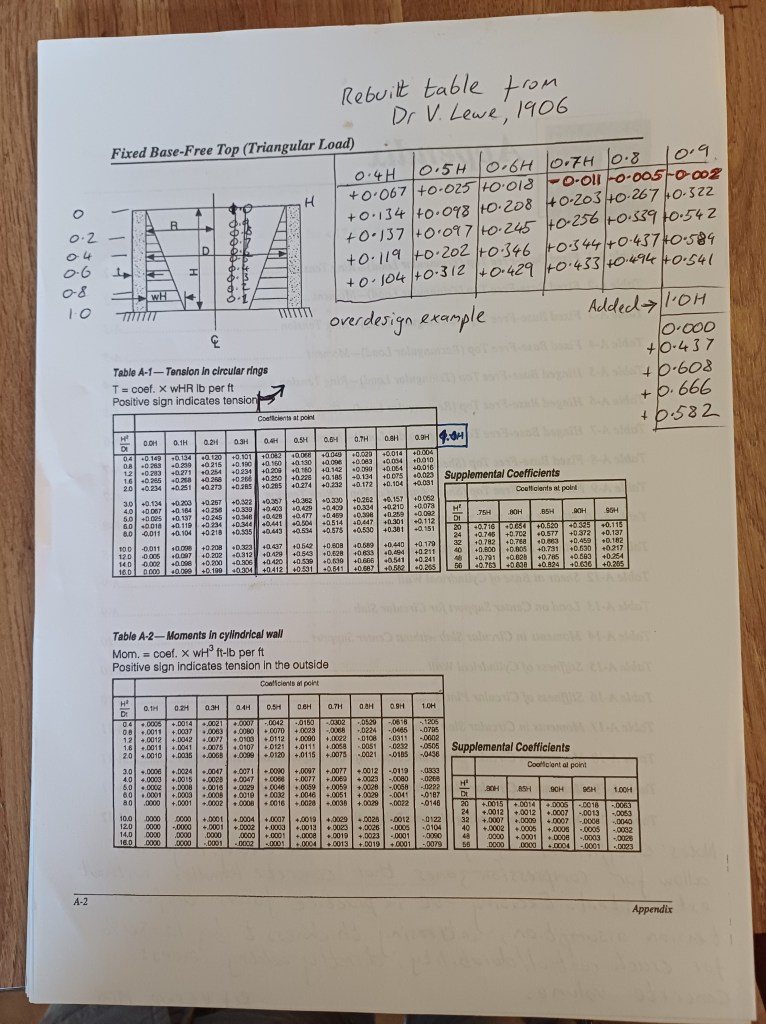
PCA’s Circular Concrete Tanks Without Prestressing (1993, based on 1942/1965 eds.) provides unreferenced coefficient tables for tensions/moments, but it is now possible to place Lewe 1906 as the reference via Emperger-Carpenter chain (Emperger Handbuch 1915–1927, Carpenter 1927 statics). Also the tables can be rebuilt from Lewe 1906:
- Start with sudden fixation equation (p. 47): Force F over infinitesimal time Δt as F/Δt → equilibrium at fixed points.
- Normalize to vector potential: Twist as bidirectional rotation (Abb. 14 reuse), yielding coefficients for ring tension (C = F/ (m s^2)).
- Layer continua: Divide into 6 sections (Abb. 5 waves), compute mass moments M = r F sinθ, revealing coefficient value adjustments to excise the negative M (from geometrical acceleration at handover (Re = 2.16)).
- Apply to tanks: Scale to PCA Table A1, where negative moments (excised in final) indicate dynamic pulses in concrete from twisting force in water (aether grains resisting entropy). Amended Table A1 highlights negatives as elastica inefficiency—solid matter mantle crusts with cracks focusing all vector potential into tectonic motion relative to each other.
Conclusion
The links from Love (with da Vinci) and Reynolds with Lewe bridging to the PCA’93 prove the aether as granular continuum pulsing at Earth’s elastica. Tables from Lewe 1906 confirm dynamic negatives, anchoring geocentric equilibrium as already existing in current engineering practice.
The Aether then is also demonstrated as the medium of the propagation light, with the Reynolds-Lewe Bridge as its analytical architecture.
References
Love (1892), Reynolds (1903), Lewe (1906, 1915), Emperger Handbuch (1915–1927), Carpenter (1927), PCA (1993), da Vinci Madrid Codex (via ace-consultancy.uk). Full at https://ace-consultancy.uk/nobne/.
 ace-consultancy.uk